Storm damage repair is the work of stopping water where it gets in and restoring what wind and hail tore loose. Most Orlando calls start with a lifted shingle or a gutter packed with debris. Water then wicks sideways under the underlayment and stays there.
After a storm, the obvious damage is rarely the expensive part. Water that seeps past the drip edge or a cracked pipe boot soaks the roof deck, and your plywood or OSB sheathing starts to rot.
By the time a ceiling stain appears, the decking is part of the bill. That is why we push for a roof inspection the same week. The earlier we catch it, the more of the roof we can mend instead of replace.
Signs you need storm damage repair after a Central Florida storm
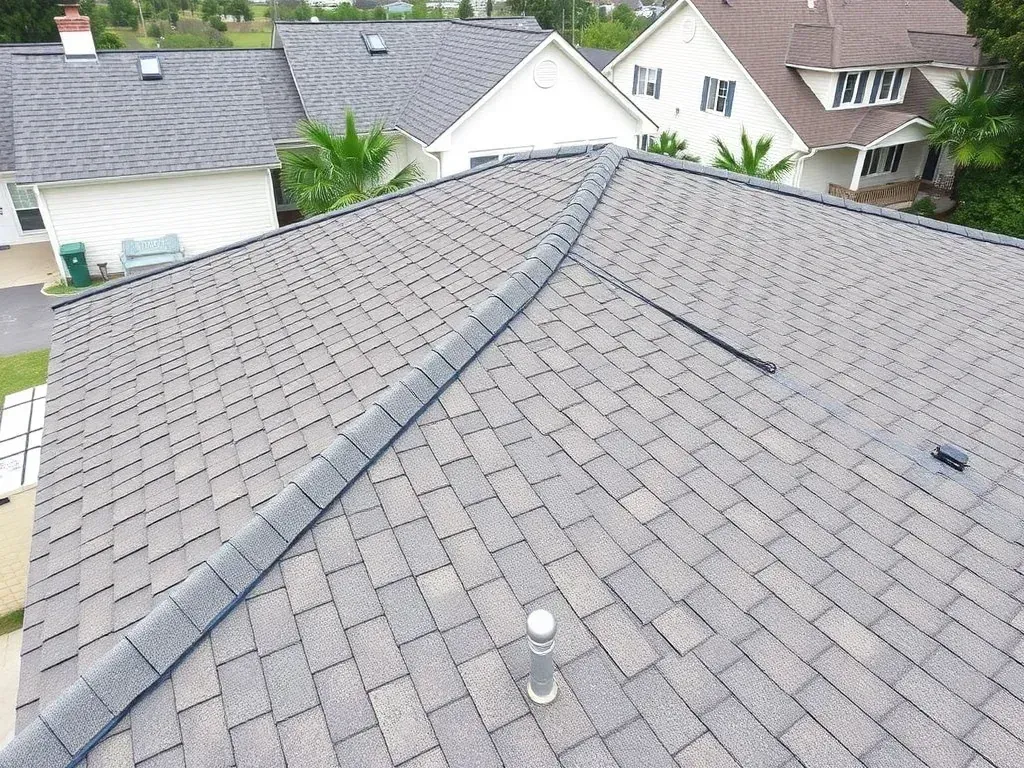
- Missing or creased asphalt shingles along the field course, especially at the rake and ridge where wind uplift hits first.
- Granule loss that leaves architectural shingles looking bare in patches after hail.
- Ceiling staining or water at the soffit vent, usually tracing back to step flashing or chimney flashing that pulled loose.
- A sagging gutter or a separated downspout, letting runoff pool against the fascia and erode the eave.
- Blistered or peeling sealant around pipe flashing, a skylight, or a vent boot, where caulk was the only defense.
- Debris packed in a valley or against the chimney, holding moisture on the substrate long after the rain stops.
We work all over Orange County, including College Park, Thornton Park, Baldwin Park, the Mills 50 and Milk District blocks, and with property managers along I-4 and State Road 408. After a named storm we triage active leaks first.
Materials that hold up to Orlando heat and rain
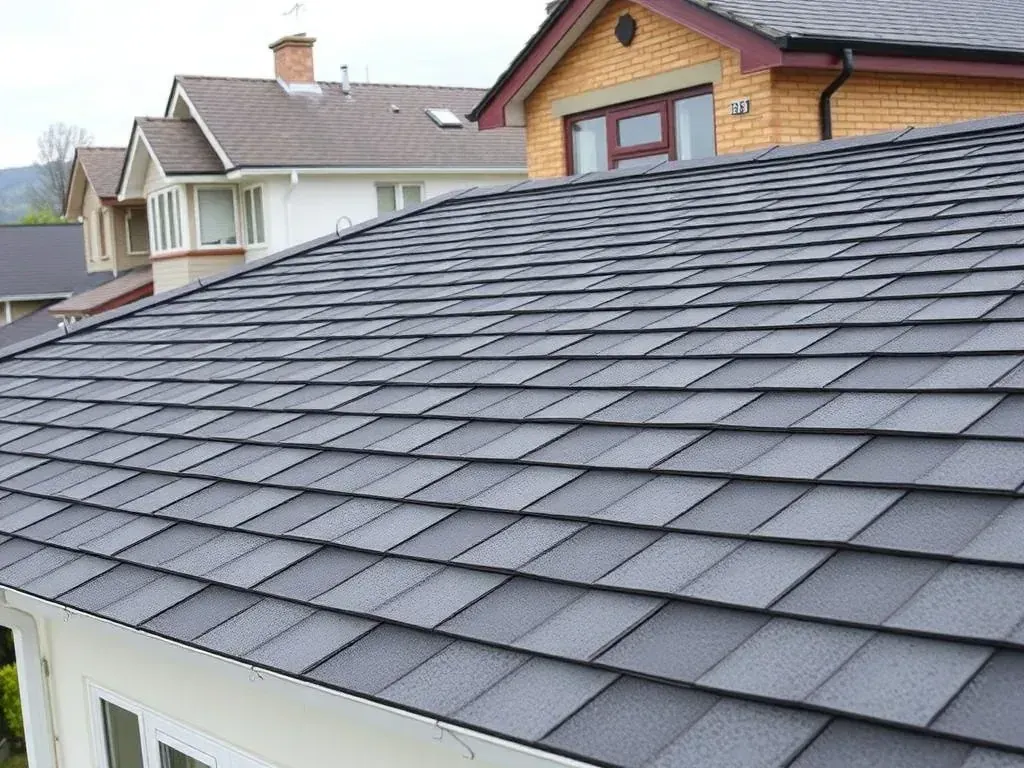
- Architectural shingles from GAF or Owens Corning carry a heavier mat than three-tab shingle and resist wind uplift better.
- A self-adhered ice-and-water shield along the eave and valleys handles wind-driven rain, even though true ice dams are rare this far south.
- Synthetic underlayment replaces roofing felt and tar paper, because humid air degrades old felt long before it bothers the newer material.
- Standing-seam metal panels with concealed fasteners suit rooftops where UV degradation and corrosion wear shingles out early.
- Clay tile, concrete tile, and slate fit the 2000s Mediterranean-style stucco villas, provided the truss and rafter system can carry the weight.
- TPO, EPDM, or a PVC membrane covers low-slope rooftops, sealed at the parapet, scupper, and coping.
- Cedar shake and wood shake last only where ventilation keeps the deck dry, since Orlando humidity rots shake from underneath.
What our storm damage repair process includes
- Rapid damage inspection, usually the same day or next, with photos of every slope, hip, gable, dormer, and overhang.
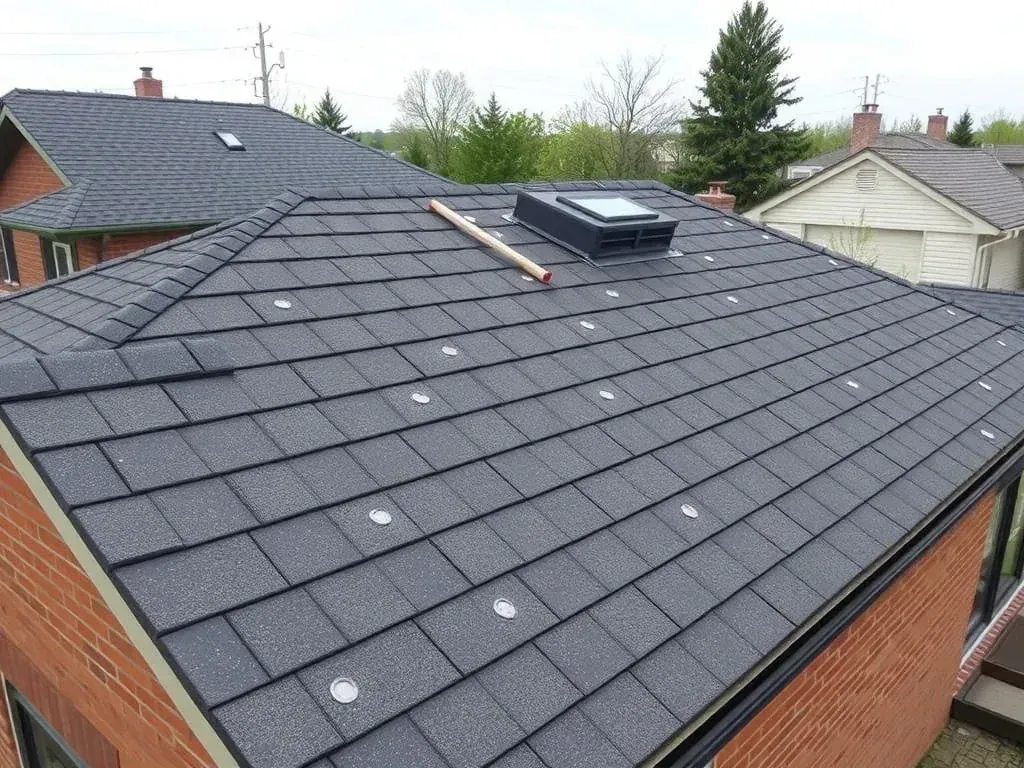
- Emergency tarp and temporary waterproofing so water intrusion stops that night, not next week.
- Xactimate line-item documentation plus adjuster coordination, so the insurance scope and your roof estimate match the actual damage.
- Tear-off of the damaged field course, starter course, and ridge cap, down to sound substrate.
- Replacement decking wherever rot, decay, or delamination reached the plywood or OSB.
- New step flashing, counter-flashing, apron flashing, boot flashing, and drip edge, hand-sealed with roof cement and mastic instead of caulk alone.
- A final roof inspection before the dumpster leaves, with a written summary of everything we renewed.
Our crews work off ladder and scaffold in safety harnesses, using pry bars, roofing shovels, nail guns, and a truck-mounted air compressor.
Fasteners are ring-shank nails set to the correct depth, and we measure in roofing squares. An overdriven nail or a short screw is one reason a repaired roof leaks again.
Roof components we check, reset, or replace
- Ridge vent and attic fan assemblies, since a storm that lifts the ridge cap often unseats ventilation with it.
- Sealant, adhesive, and a reflective coating on parapets and curbs we reseal rather than rebuild.
- Batten, counterbatten, and purlin layers on tile and metal systems, where a broken fastening layer lets the whole field shift.
- Corrugated panel and corrugated metal sections on sheds, canopies, awnings, and outbuildings.
- Vapor barrier and attic insulation, inspected in the attic whenever a leak has been wicking for weeks.
- Snow guard and rooftop anchor hardware on commercial buildings, with the weatherproofing around each one checked.
- Mansard and gambrel rooflines, where a steep upper face hides a leak starting at the verge overhang below.
Flat and low-slope commercial rooftops are a different job. A built-up roof with alternating asphalt and bitumen layers, or a torch-applied modified bitumen cap sheet, fails differently than a pitched shingle roof.
Ponding water finds the seams first. The parapet, scupper, and coping are where most flat-roof leaks begin, so we reseal those details before anything else.
Roof pitch decides what we can use. Below a 2:12 slope, asphalt shingles shed water too slowly, and a membrane system is the honest choice.
On older Mid-Century bungalows, we sometimes open a roof and find the original rafter or joist notched for an old vent, or a ridge beam carrying more load than the building code allows. That detail changes the estimate.
Gutters and downspouts get checked on the same visit, because a repaired roof still fails when runoff has nowhere to go. And we do not patch with tar and call it finished.
Insurance claim assistance after a storm
Storm damage claims move on deadlines. We document the storm date, photograph every damaged slope, and prepare a line-item estimate your adjuster can work from, which usually shortens the back-and-forth.
- We photograph and measure before anyone touches the roof, so nothing gets repaired out of the claim.
- We meet the adjuster on site when the scope looks low and request a supplemental claim with the missing line items.
- We will say so if the damage sits under your deductible, because a small repair you pay for directly often beats a claim on your record.
- We reseal what does not need replacing, since restoring a sound section beats selling you a whole roof.
We are licensed and insured, and the same roofer stays on your job from inspection to final walkthrough. Hiring a roofing contractor who documents the damage correctly matters more than the lowest bid on the first estimate.