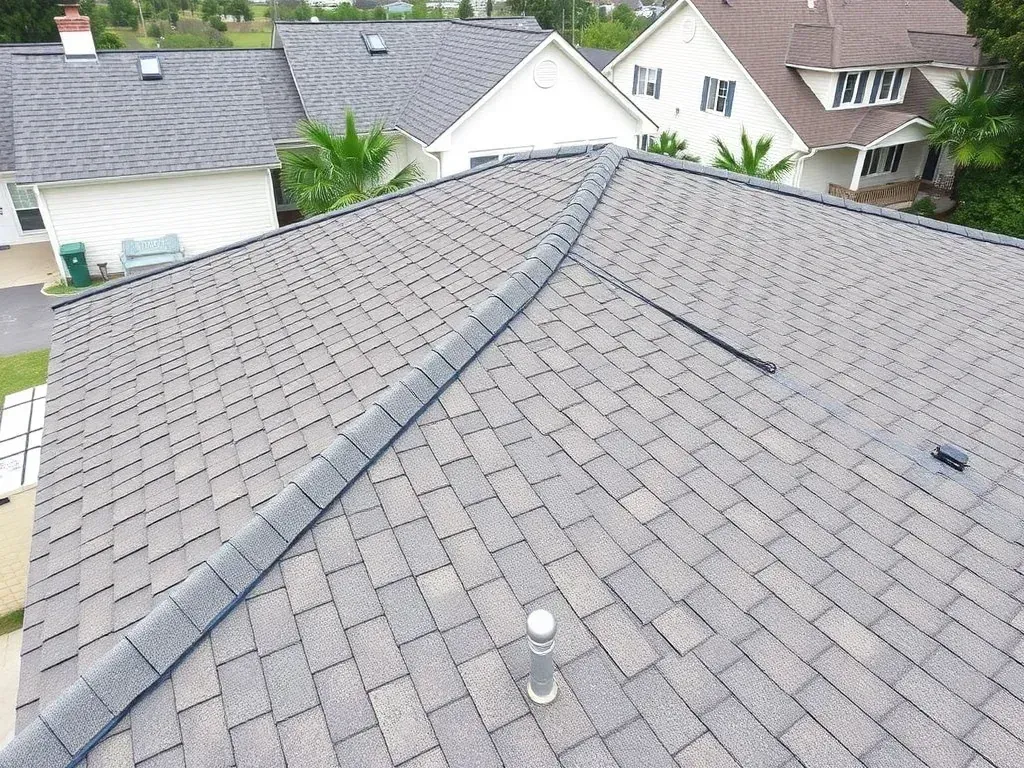
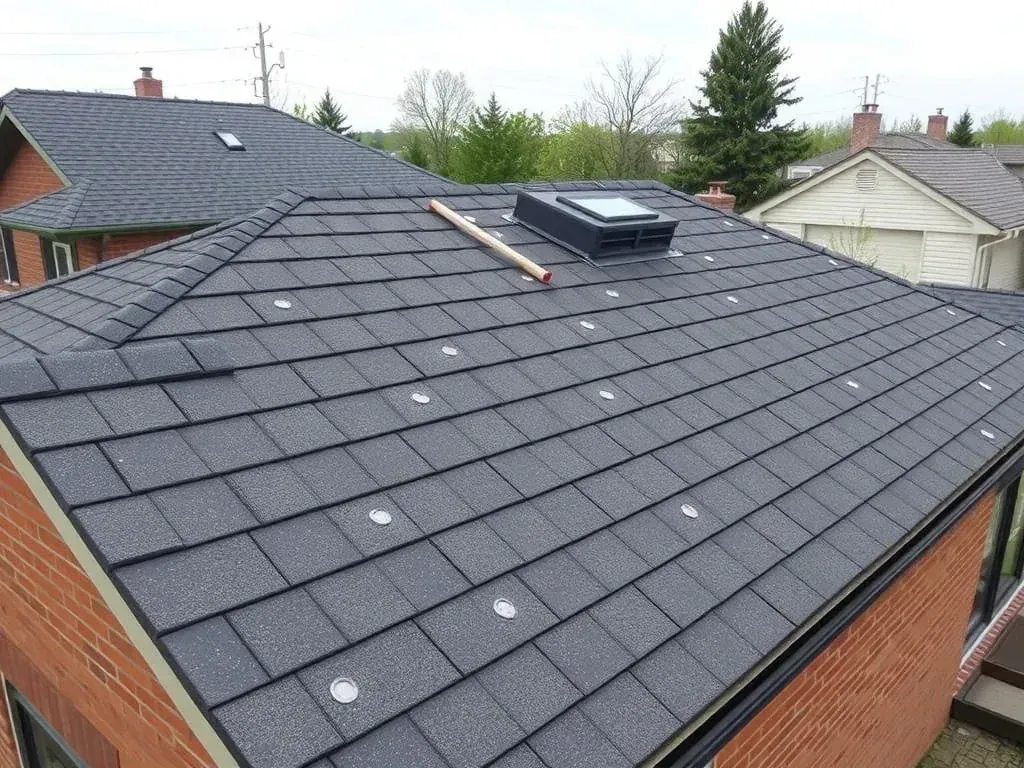
Shingle roofing starts with tearing the old courses down to the roof deck, then checking the plywood or OSB sheathing for rot, soft spots, and water stains. We swap any spongy panel and clear the debris before the substrate gets covered.
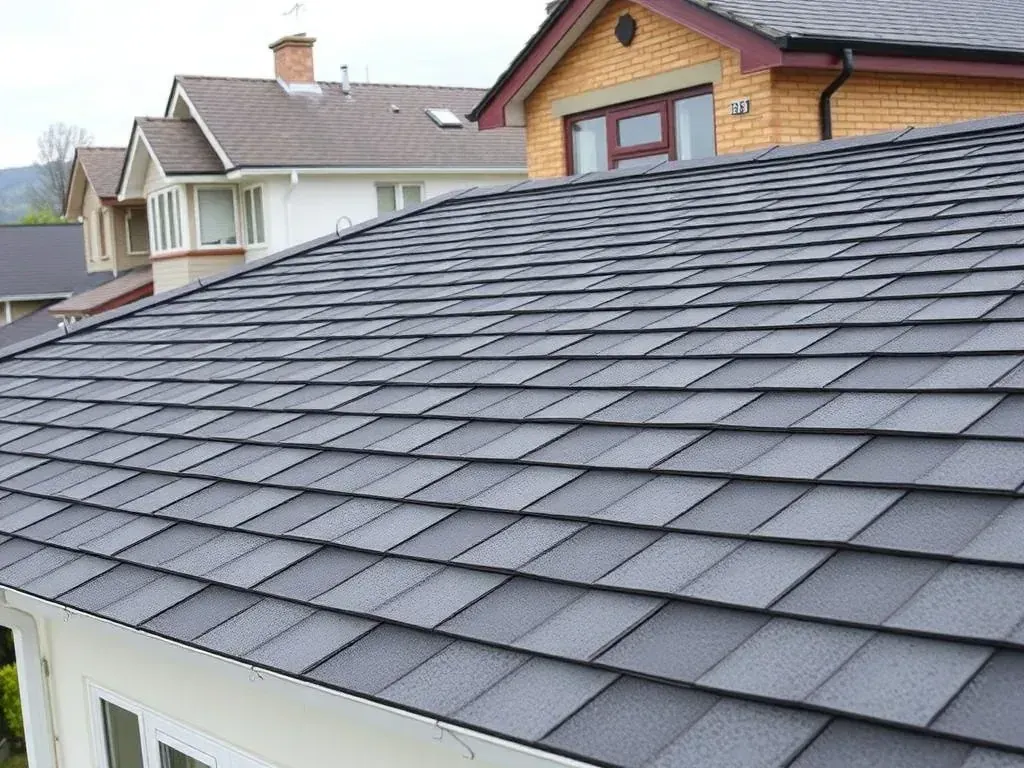
For most homes we set an architectural shingle: GAF Timberline HDZ, Owens Corning Duration, or CertainTeed Landmark Pro. These laminated, granulated, fiberglass products carry a stronger wind rating than three-tab shingle, which we still install on rental properties where budget leads.
Every roof we build gets synthetic underlayment over the deck, a ridge vent paired with soffit vents to push superheated attic air out, and a drip edge line on rakes and eaves. Ventilation is what slows granule loss.
- Ice-and-water shield is a self-adhered membrane we run along the eaves and up the valleys, which is also where an ice dam would sit in a colder market.
- Ring-shank nails hold the starter course and field course far better than smooth shank when tropical-storm gusts pry at the eave edge.
- Step flashing, counter-flashing, and chimney flashing keep water from wicking sideways into a wall or around the brick.
- Pipe flashing and boot flashing seal the plumbing vents, and a worn pipe boot is the single most common leak source we find.
- Valley metal gets hand-sealed at the laps, and apron flashing caps the base of the chimney, so both roof planes drain instead of ponding.
- Florida building code sets the wind uplift attachment schedule, and we pull the permit before the dumpster lands in the driveway.
- Rotted fascia, soffit, or rake boards get replaced before trim goes back on, because new shingle over decay just hides the problem.
- On a steep gable or a small mansard over the entry, the roof pitch decides how we set scaffold and anchor points for the ladder crew.
- From the attic side we read the trusses and rafters for sag, rusted fasteners, and stains, and we check insulation and the vapor barrier for dampness.
- When the deck is sound and the budget is tight, an overlay can buy a few years, though we tell you plainly that a full tear-off lasts longer.